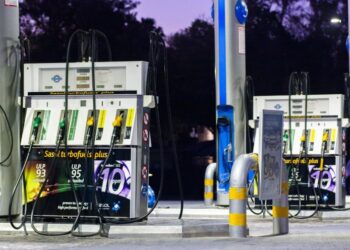


Fuel Price Increase: South Africa Braces for Unprecedented April 1st Hikes
The South African economy is staring down a fiscal cliff as the fuel price increase scheduled for Wednesday, April 1, 2026, promises to be the most severe in the country’s history. Driven by the catastrophic closure of the Strait of Hormuz amid escalating Middle East tensions, the Central Energy Fund (CEF) has confirmed that motorists will face a staggering R10.34 per litre hike for diesel and approximately R6.00 per litre for petrol.
As part of our Africa News Update 2026, we are tracking the widespread panic buying and localized rationing that have gripped the nation’s forecourts. Within the first 100 words, it is clear that this fuel price increase is not merely a seasonal adjustment but a systemic shock that will reshape the cost of living for millions.
The Numbers: Breaking Down the Record Hikes
The scale of the April 2026 adjustment is mathematically unprecedented. For the first time, diesel under-recoveries have breached the double-digit mark, fueled by a global oil price that has surged past $115 per barrel.
Inland Price Projections (April 2026)
| Fuel Grade | March Official | April Expected (incl. Tax) | Total Increase |
| 95 Petrol | R20.30 | R26.27 | + R5.97 |
| 93 Petrol | R20.19 | R26.16 | + R5.97 |
| Diesel 0.05% | R18.53 | R28.87 | + R10.34 |
| Paraffin | R12.54 | R24.00 | + R11.46 |
The hike is compounded by a 21-cent-per-litre increase in various levies, including the Road Accident Fund (RAF) and the general fuel levy, which were announced in the February Budget speech. For a typical SUV owner, filling a 150-litre tank will now cost over R4,300, an increase of more than R1,500 in a single month.
Panic Buying and the “Rationing” Reality
As the Wednesday deadline approaches, South Africans have flooded fuel stations, leading to widespread “dry pumps” in the Southern Cape and parts of Gauteng. The Department of Mineral and Petroleum Resources (DMPR) has issued several statements urging against panic buying, but mobility data shows a 10% surge in diesel stop volumes as commercial operators hedge against the R10 spike.
Rationing in the Agricultural Sector
The Business of Farming has been hit hardest. In rural areas, fuel rationing has already begun, with some farmers limited to 5,000 litres to ensure the autumn planting season isn’t entirely halted. This scarcity is expected to trickle down into the Health and Nutrition of the nation, as food transport costs are projected to rise by 15% by May.
The Geopolitical Engine: Why Now?
This fuel price increase is a direct byproduct of the conflict involving the US, Israel, and Iran. The effective closure of the Strait of Hormuz—a waterway through which 20% of the world’s oil flows—has created a global supply vacuum.
South Africa, which relies heavily on imported refined products due to limited local Technology and Infrastructure, is particularly vulnerable. President Cyril Ramaphosa has reportedly established a ministerial task team to “find ways to soften the blow,” though Treasury officials have warned that there is little “fiscal space” to provide a meaningful subsidy or tax holiday.
Africa News Update 2026: Continental Economic Ripple Effects
Our Africa News Update 2026 highlights that South Africa is not alone. Neighbors like Namibia and Zimbabwe, which often peg their pricing or supply chains to South African infrastructure, are bracing for similar shocks. The Business of Logistics across SADC (Southern African Development Community) is in a state of emergency, with freight companies considering a “war surcharge” on all cross-border deliveries.
Technology and the Future of Transport
In response to the crisis, there has been a renewed focus on Alternative Technology. AI-driven logistics platforms are being used by large fleets to optimize routes and reduce idle time, saving precious litres. Furthermore, the demand for electric vehicles (EVs) in South Africa has seen a 300% inquiry spike this month as motorists look for a way to exit the volatile internal combustion engine (ICE) market.
For those who must Travel across South Africa for work or tourism, the use of fuel-sharing apps and AI-powered public transport trackers has become an essential part of daily life.
The “Sleepless Nights” for Leadership
President Ramaphosa famously stated that he and Finance Minister Enoch Godongwana are having “sleepless nights” over the crisis. The fear is that the fuel price increase will trigger a “national disaster” of hyper-inflation. The South African Reserve Bank (SARB) has already signaled that interest rate cuts, which were expected in late 2026, may now be postponed as they struggle to keep the Rand (currently at R17.10 to the USD) from further collapse.
Conclusion: A Dark Wednesday Ahead
The fuel price increase of April 2026 will be remembered as the moment the global energy crisis truly hit home for South Africans. With diesel reaching R28 per litre, the cost of moving goods and people has entered a new, dangerous era.
For the most authentic and verified news across the continent, stay with AfrikEye.