




Eritrea Commemorates World Food Safety Day with National Push for Stronger Controls
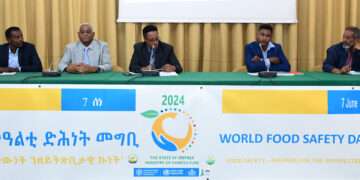
The annual observance of World Food Safety Day was marked at a national level in Asmara, bringing together key policymakers, international partners, and agricultural experts to address food-borne health risks. Commemorated under the global theme “From Burden to Solutions: Safe Food Everywhere!”, the event highlighted Eritrea’s scaling efforts to secure its agricultural value chain, mitigate chemical contaminants, and build a resilient framework for public nutrition.
As the country marks this event for the fourth time nationally—and the eighth time globally—the focus has firmly shifted toward establishing absolute regulatory clarity to protect local populations and elevate agricultural business standards across the region.
Addressing Agricultural Contamination and Pesticide Risks
In his keynote address, Mr. Tekleab Mesghena, Director General of the Regulatory Services Department at the Ministry of Agriculture, openly acknowledged that food-borne diseases caused by harmful microorganisms and chemical contaminants remain a critical challenge in Eritrea. Government monitoring has increasingly focused on food contamination resulting from the improper use of chemical pesticides on fresh fruits and vegetables. Because these public health issues carry severe social and economic consequences, the ministry is deploying intensive efforts to prevent and manage risks directly at the source.
To create an integrated national defense system, the Ministry of Agriculture is leveraging its role as the national focal institution for the international Codex Alimentarius standards. Initiatives are currently underway to draft a comprehensive national food control policy. This upcoming legal framework will clearly define the roles and institutional boundaries of various ministries, eliminating administrative overlaps and boosting enforcement capabilities.
Strategic Frameworks with FAO and WHO Partnerships
Representing the Food and Agriculture Organization (FAO) in Eritrea, Ms. Ariella Glinni emphasized that ensuring safety requires seamless cooperation across multiple sectors. She noted that the 2026 theme perfectly matches the Ministry of Agriculture’s current five-year strategic roadmap, which envisions “Safe and Nutritious Food for Everyone, Everywhere.”
According to Glinni, maintaining a secure supply chain requires active risk mitigation from the farm level through storage, transit, marketing, and final consumption:
- Multisectoral Alignment: Effective systems depend heavily on strong coordination spanning agriculture, public health, trade networks, and education.
- Economic Stabilization: Every proactive investment in food safety minimizes post-harvest losses, safeguards farming jobs, and builds public trust in food markets.
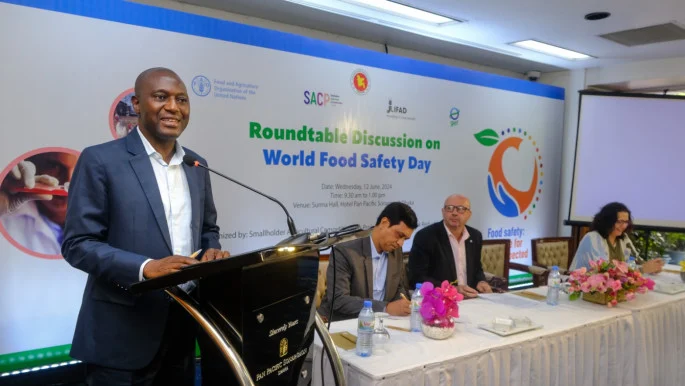
Detailing the global scale of this challenge, Dr. Asefash Fessehaye, representing the World Health Organization Office in Eritrea, shared alarming annual baseline statistics:
Globally, approximately 866 million people suffer from food-borne illnesses each year, resulting in more than 1.5 million preventable deaths annually due to contaminated provisions.
Driving Policy Reforms Beyond World Food Safety Day
The national recognition of World Food Safety Day serves as a vital catalyst for accelerating long-term legislative reforms within the country’s agrarian sectors. By embedding strict international guidelines into local laws, the state not only protects public health but also strengthens the foundational infrastructure necessary for robust economic business expansion. Ultimately, translating these annual awareness campaigns into actionable regulatory policies ensures that food production systems remain highly resilient against global supply shocks while shielding local agricultural jobs from structural instability.
These global figures highlight why building reliable domestic safety standards is treated as a matter of national security rather than a purely administrative issue. In local opinion spaces, analysts argue that achieving sustainable health metrics directly influences regional politics, as food-secure nations maintain greater economic autonomy.
The conference concluded with expert-led technical presentations focusing on practical agri-food solutions, the Ministry of Health’s specialized safety initiatives, and services provided by the Eritrean Standard Institute to guarantee consumer safety. By transforming these strategic insights into actionable field policies, Eritrea is building a health infrastructure capable of protecting generations to come.