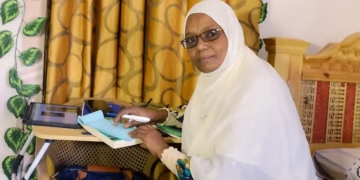





Addressing sudan war’s sexual violence has become an urgent, multi-state priority as tactical terror across East Africa reaches catastrophic levels, turning gender-based crimes into an outright weapon of political repression and communal control. As internal displacement camps swell with millions of traumatized survivors, an extraordinary network of local female medical professionals and psychosocial officers is standing firm to lead the healing process. These brave individuals are operating under extreme personal danger, often managing overwhelmed field clinics while enduring the harsh realities of displacement themselves.
The staggering escalation of conflict-related atrocities has put immense pressure on local community infrastructure and medical resources. According to recent data compiled by international tracking bodies, verified incidents of gender-based crimes globally doubled between recent analytical cycles, highlighting a devastating systemic breakdown. Within local borders, documenting the true extent of sudan war’s sexual violence remains incredibly dangerous due to severe social stigma, fear of military retaliation, and the wholesale destruction of regional judicial systems.
This prolonged instability continues to deeply impact the volatile landscape of regional politics, as continental bodies demand immediate accountability and comprehensive civilian protection frameworks. State administrative structures are facing massive pressure to enforce strict legal consequences against armed factions that exploit vulnerable populations. Resolving this deep humanitarian crisis is a fundamental requirement to restore institutional trust and build sustainable diplomatic channels across neighboring territories.
| Year | Verified Cases / Affected Population | Operational Scope | Impact Details |
|---|---|---|---|
| 2024 | ~4,900 Verified Cases | Global Conflict Zones | Baseline global tracking of wartime assault metrics. |
| 2025 | 9,788 Verified Cases | Global Conflict Zones | Massive 100% year-over-year surge in verified violations. |
| 2025 | 500+ Highly Detailed Cases | Sudan National Territory | 98% of targeted victims identified as women and girls. |
| 2026 | 12.4 Million Individuals | Sudan Displacement Grid | Quadrupled volume of citizens requiring emergency trauma care. |
The ongoing security collapse has also completely disrupted the broader East African business sector, shutting down major commercial corridors and halting agricultural production lines. When vital trade hubs are transformed into active combat zones, private enterprises face catastrophic capital losses, forcing thousands of local merchants into absolute destitution. Restoring safety to these economic transit pathways is highly vital to attract foreign direct investments and revive cross-border market liquidity.
Facing the Devastating Impact of Sudan War’s Sexual Violence
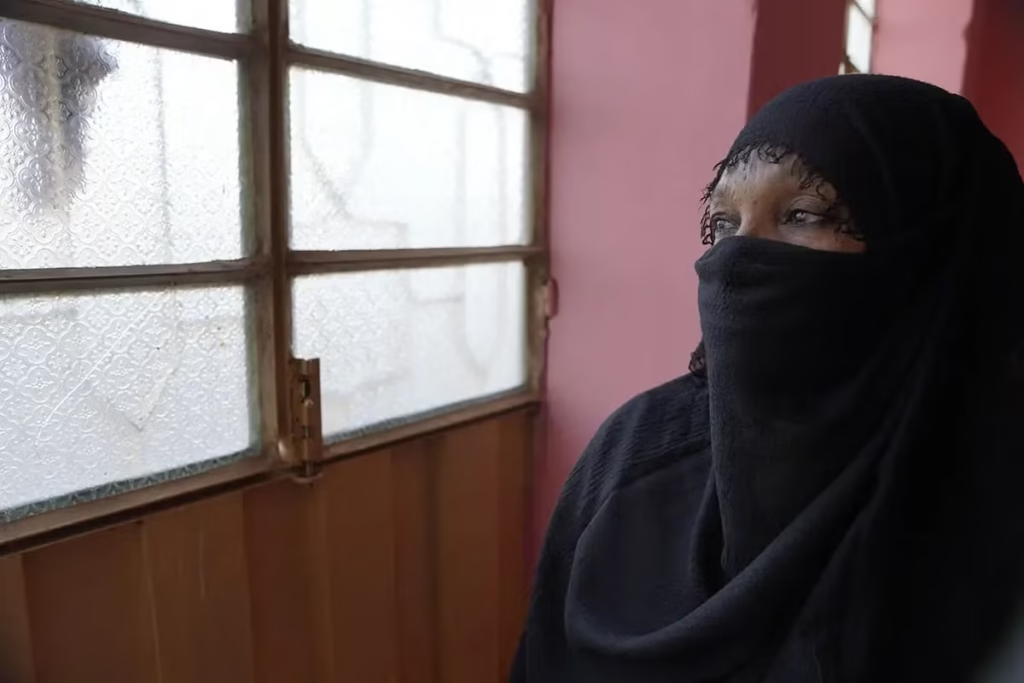
To counter this humanitarian catastrophe, specialized medical practitioners are establishing mobile trauma units in secure coastal zones. Doctor Amana Suleiman, a highly experienced clinical psychologist who was forced to flee her permanent home in Khartoum, is actively leading specialized emotional release sessions in Port Sudan. Working under the umbrella of the Sudanese Coalition for Education for All, her daily work demonstrates that mitigating the psychological scars of sudan war’s sexual violence requires continuous, structured rehabilitation networks.
Operating right alongside her is her daughter, Doctor Fatima Ahmed, a dedicated general practitioner who manages the initial clinical triage for survivors arriving from active combat zones. Dr. Ahmed works tirelessly to evaluate complex physical traumas, coordinate emergency pharmaceutical interventions, and refer critical cases to specialized obstetricians and gynecologists. This critical medical coordination is essential to preserve long-term reproductive health profiles and provide dignified care to women who have survived collective assaults.
Wholesale changes are needed to protect these frontline workers. Deep within the volatile territory of Tawila in North Darfur, psychosocial support officer Al-Tatouma Juma is managing an influx of hundreds of thousands of displaced families. Many of the survivors under her direct supervision fled the targeted capture of El Fasher, where external tracking missions confirmed widespread ethnically motivated executions and systemic abuses. Juma’s grassroots organization operates under extreme resource constraints, highlighting the urgent need for international agencies to direct at least 15 percent of emergency humanitarian funds directly to women-led local networks battling sudan war’s sexual violence.
The long-term development of these localized medical registries is driving a major expansion of highly specialized public health jobs across the regional humanitarian sector. International relief funds are actively recruiting experienced field counselors, trauma doctors, and rights investigators who can accurately document ongoing violations. Investing in these local professional cohorts allows communities to build resilient administrative foundations, transitioning their posture from temporary emergency response to permanent social recovery.
To optimize the distribution of urgent medical counter-measures and track displacement metrics efficiently, regional coordinators are updating their communications infrastructure. Field clinics are deploying decentralized data logging platforms within the local tech sector to securely map patient needs while maintaining strict anonymity to protect survivors from retaliation. This digital expansion helps field teams communicate real-time supply shortages to continental medical networks, including the specialized response assets of the Africa CDC emergency portal.
Furthermore, the predictive modeling of regional displacement trends and the tracking of localized medical supply chains are being enhanced through automated computing systems. Aid agencies are exploring how advanced predictive software and specialized ai data modeling can help identify high-risk border corridors before fresh displacement waves occur. Utilizing artificial intelligence allows logistical teams to pre-position specialized trauma kits with high precision, ensuring that emergency resources are available exactly where local vulnerabilities peak as a direct result of sudan war’s sexual violence.
Independent humanitarian columnists sharing their professional opinion emphasize that military declarations mean nothing without an immediate, uncompromised cessation of hostilities on the ground. They argue that global funding groups must move past empty rhetorical pledges and deliver flexible, direct financing to the frontline groups doing the actual work of rebuilding broken communities. Elevating the leadership of African women within formal peace negotiations remains a critical requirement to secure a stable and just future for the entire nation.
Ultimately, defeating the epidemic of wartime atrocities requires an absolute coordination of international law, localized medical infrastructure, and structural funding models. By providing survivors with a safe environment to speak, write, and process their experiences, these frontline specialists are slowly turning intense suffering into permanent resilience. Maintaining this uncompromised focus on human dignity will allow the region to defeat the shadow of sudan war’s sexual violence, protect public wellness, and secure sustainable social transformation.