The unfolding ramaphosa legal challenge impeachment committee saga has officially ignited a high-stakes constitutional war inside South Africa. Following the recent milestone Constitutional Court ruling that revived a once-dormant parliamentary investigation into the infamous Phala Phala farm scandal, the executive branch has shifted into an aggressive defensive stance. President Cyril Ramaphosa has launched an urgent interdict to pause all legislative proceedings, arguing that moving forward before a judicial review of the underlying panel findings concludes would violate his fundamental right to administrative justice.
The core of this unprecedented legal battle stems from the independent panel report compiled by retired Chief Justice Sandile Ngcobo, which originally found prima facie evidence that the president may have committed serious violations of the constitution. While the ruling African National Congress (ANC) previously utilized its absolute parliamentary majority in late 2022 to quash the report, the apex court has effectively nullified that vote, declaring it unlawful. This judicial intervention forces parliament to establish a dedicated multi-party panel, thrusting the president’s leadership back into intense public scrutiny.
As a result of this sudden structural escalation, the president’s legal team has filed extensive court papers in the Western Cape High Court to prevent the parliamentary panel from commencing its scheduled hearings. In his founding affidavit, the head of state forcefully claims that the upcoming public inquiries will expose his office to ungrounded and highly defamatory claims before the international community. The continuous friction surrounding the ramaphosa legal challenge impeachment committee shows that the presidency is determined to invalidate the independent panel findings before public cross-examinations begin.
The unfolding political drama is creating a volatile environment across the national legislative assembly, where rival political groups are aggressively positioning themselves for a protracted institutional battle. Several radical factions have already condemned the presidency’s latest litigation strategy, accusing the head of state of abusing public funds to delay legitimate constitutional accountability mechanisms. Major political networks are demanding that the state assembly defend its oversight mandates, noting that opposition parties pile pressure on Parly Speaker to firmly resist the president’s urgent application.
This growing administrative friction has multi-layered implications for the broader national politics landscape, as the country’s newly formed Government of National Unity faces its first serious internal stability test. Coalition partners like the Democratic Alliance are now forced to navigate a complex path between maintaining their alliance pacts and honoring their historical anti-corruption promises. This political tightrope act is deeply affecting public confidence, with local civil society groups expressing deep concerns over the apparent paralysis creeping into federal oversight departments.
The continuous threat of administrative gridlock is also casting a dark shadow over the sub-regional business environment, where foreign direct investors favor absolute policy predictability and rule of law above all else. Financial analysts warn that a protracted executive trial will inevitably sap the administration’s political capital, diverting focus away from crucial macroeconomic overhauls and energy grid stabilizations. The volatile nature of the ramaphosa legal challenge impeachment committee litigation could trigger currency fluctuations, dampening commercial activity and delaying key infrastructure projects.
Strategic Realities of the Ramaphosa Legal Challenge Impeachment Committee
The high-stakes legal showdown is accelerating toward a definitive judicial climax as senior judges allocate specific dates to evaluate the emergency interdict requests. Legal representatives for the presidency are rushing to compile cross-arguments to prevent any premature parliamentary gatherings before the mid-winter recess. The Western Cape High Court has officially declared that the highly anticipated impeachment inquiry interdict showdown set for July will undergo full oral arguments, creating a critical checkpoint for the nation’s democracy.

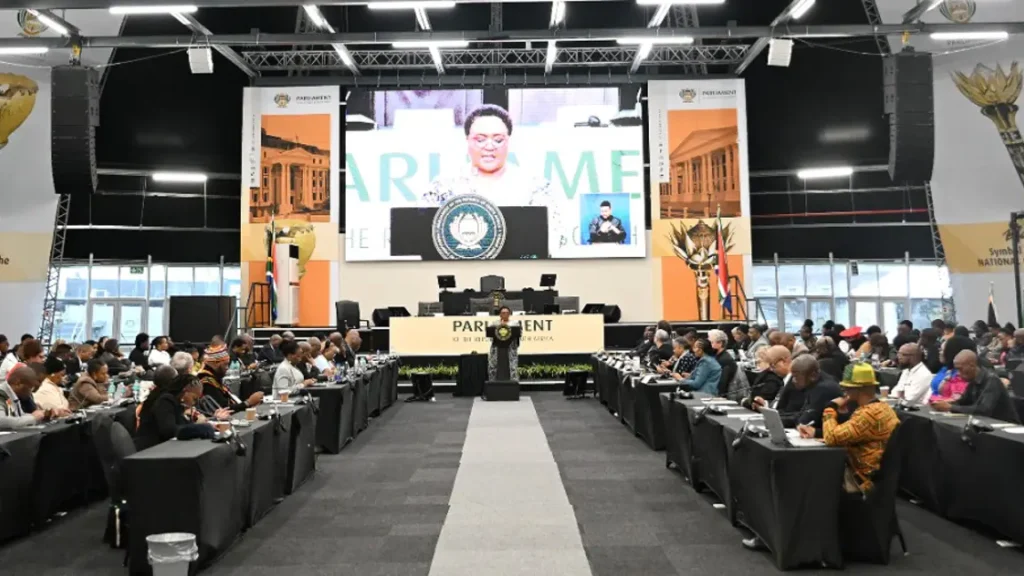
In his detailed affidavit, the president explicitly warns that permitting a compromised legislative process to move forward will cause irreversible reputational harm to the ruling party and the state. He argues that if the courts later invalidate the original Ngcobo panel findings, parliament would have wasted massive state resources running a completely unlawful political trial. Observers tracking the case note that Ramaphosa says he’ll suffer irreparable harm if impeachment process continues without a definitive prior review of the underlying evidence.
The long-term resolution of this institutional crisis will also determine the future trajectory of public sector employment and the creation of private sector jobs across the country. Sustained economic growth requires an active, uncompromised executive branch capable of pushing forward structural labor reforms and industrial modernization programs. If the ramaphosa legal challenge impeachment committee dispute drags on for multiple fiscal quarters, corporate decision-makers may freeze capital investments, slowing down employment expansion.
To manage the heavy administrative workload resulting from these simultaneous court reviews and legislative inquiries, parliament is upgrading its digital reporting systems. State archivists are utilizing specialized data capture software and modern communication tools to manage thousands of legal briefs and evidence files securely. This administrative modernization offers unique growth opportunities for local enterprises specializing in secure cloud database design and public sector data tech infrastructure.
Furthermore, the processing of complex constitutional precedents and legal texts is being streamlined through the implementation of automated data parsing platforms. Public legal research bodies are experimenting with advanced ai text synthesis tools to track historical impeachment protocols and match international best practices across sovereign jurisdictions. The volatile nature of the ramaphosa legal challenge impeachment committee highlights how advanced digital tracking models are becoming standard fixtures within contemporary judicial analytics.
Independent political scientists sharing their professional opinion in public forums point out that the ongoing legal battle represents a critical test of South Africa’s constitutional architecture. While the political friction introduces severe short-term instability, the active role of the independent judiciary demonstrates that no single individual stands above supreme statutory laws. As the ramaphosa legal challenge impeachment committee case evolves, maintaining this institutional balance remains essential to protect citizens’ rights and optimize public service delivery.
Beyond the immediate legal parameters, managing this high-stress governance crisis places a substantial psychological and physical strain on the country’s aging political leadership. Public safety commentators note that navigating concurrent national security matters, legislative trials, and global economic summits requires optimal mental wellness and physical resilience. This reality shows that stabilizing executive management systems is vital to preserve administrative focus, protect public health tracking initiatives, and maintain general citizen safety.