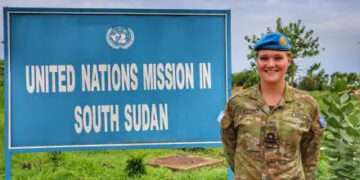





The united nations mission in south sudan has officially launched an intensive, multi-state advocacy network designed to elevate the voices of young citizens and foster long-term community reconciliation. In a landmark assembly held in Kuajok within Warrap State, thousands of local residents, youth leaders, and traditional chiefs gathered under the banner of the “Hear Us. Act Now. for Peace” campaign. This structural peacebuilding initiative seeks to address historic intercommunal divides and give the youngest demographic a direct seat at decision-making tables.
The atmosphere during the regional kickoff buzzed with intense emotional weight as award-winning South Sudanese artist Irene Toss, born Amira Manyiel, took to the main stage. Known for producing powerful musical works that focus heavily on localized identity, resilience, and survival, she delivered a stunning performance of her trending youth anthem. However, immediately after finishing the song, the prominent female musician collapsed into tears off-stage, deeply moved by the sight of a vulnerable six-year-old child standing among the crowds.
This brief, raw moment of human vulnerability served as an urgent reminder of the extreme structural challenges that children face daily across the conflict-affected region. Many young individuals remain completely excluded from basic social amenities, lacking access to primary education, reliable protective networks, and stable family care systems. This ongoing socioeconomic marginalization directly shapes regional politics by feeding localized cycles of insecurity and driving vulnerable youth groups into sub-regional criminal syndicates.
For local community leaders, establishing durable tranquility requires a comprehensive approach that moves beyond the simple suspension of active military hostilities. True structural transformation can only thrive when municipal governance systems successfully establish modern schools, state-of-the-art hospitals, and secure transit corridors. By providing these necessary life assets, public institutions can effectively insulate local populations from poverty and help individuals secure long-term jobs within the expanding formal marketplace.
The structural execution of these extensive youth dialogues relies heavily on the active field coordination provided by the united nations mission in south sudan. By establishing decentralized town halls and safe spaces for intergenerational debate, the peacekeeping body is helping local youth build robust cross-border alliances. These cooperative networks are highly beneficial for expanding small-scale trade and transforming the traditional African business landscape at a grassroots level.
Simultaneously, traditional performance ensembles like the Loo Cultural Group are utilizing creative mediums to demonstrate that social recovery cannot be delayed. Their intense drumming demonstrations and forceful choreography sparked widespread conversation among the thousands gathered at the Kuajok independence field. The founders explained that preserving and passing down cultural values across generational boundaries is the most effective method to mitigate ancient tribal disputes.
Expanding Grassroots Dialogue via the United Nations Mission in South Sudan
The intentional deployment of these regional peace circles demonstrates how the united nations mission in south sudan prioritizes local ownership over external intervention strategies. Strategic field personnel are continually working alongside the Warrap State Youth Union to design accessible dispute-resolution models that match local realities. This sustained community engagement ensures that tribal representatives from all sixty-four ethnic groups can collectively voice their unique administrative concerns.
To manage these cross-state peace campaigns with high logistical precision, administrative units are integrating advanced statistical tracking software and decentralized data registries. Modern field officers use specialized remote reporting tools to map vulnerable demographic groups and monitor localized safety indicators across remote counties. This systematic modernization of public tracking networks underscores a growing reliance on modern tech systems to run humanitarian distribution workflows efficiently.
Furthermore, the processing of complex field surveys and youth census parameters is being enhanced through the deployment of sophisticated cloud database architectures. By applying automated analytical tools within these tracking frameworks, civilian affairs teams can forecast potential resource conflicts before they disrupt vulnerable communities. The successful implementation of this specialized ai infrastructure allows international non-governmental organizations to allocate financial grants to women-led agricultural cooperatives.
Local editorial analysts publishing their expert opinion columns highlight that true security cannot exist without prioritizing universal healthcare access for marginalized youth. Rebuilding local clinics and supplying clean water purification systems to remote settlements remains vital to improve baseline infant survival metrics. Protecting these isolated populations directly strengthens sub-regional community health profiles and provides a solid foundation for sustainable human development.
As the campaign expands into neighboring territories, senior officials from the united nations mission in south sudan continue to call for stronger international funding. The long-term stabilization of the world’s newest country requires a coordinated shift from short-term emergency relief toward permanent infrastructure investments. Interested stakeholders can explore the comprehensive UNMISS official news statement to analyze detailed field updates from the Warrap State assembly.
Additional perspectives on how these artistic advocacy tours are being implemented across major metropolitan universities can be gathered through the formal Radio Tamazuj coverage of the regional campaign. Giving young citizens a platform to voice their frustrations helps dismantle institutional barriers and promotes justice across all levels of society. Through this ongoing continental effort, the united nations mission in south sudan remains a critical anchor for democratic transitions and lasting stability.