




Rethinking African Economic Diplomacy: What the Seychelles and Zambia Engagement Tells Us About Regional Integration
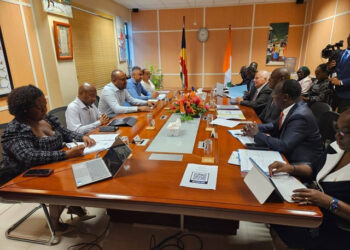
When diplomats meet for routine courtesy calls, the resulting readouts often rely on predictable platitudes about mutual friendship. However, the recent engagement between Zambia’s High Commissioner-designate to Seychelles, Alfred Musemuna, and Seychelles’ Minister for Foreign Affairs, Barry Faure, broke from this convention. Their dialogue in Victoria offered a highly specific blueprint for how African nations are increasingly leveraging bilateral ties to address structural economic vulnerabilities, secure supply chains, and deepen regional integration.
Far from a standard introductory meeting, the discussions highlighted a sophisticated alignment between two seemingly disparate nations: a high-income Small Island Developing State (SIDS) and a resource-rich, landlocked republic.
The Vulnerability Alliance and Global Finance
Perhaps the most globally significant aspect of their dialogue was Minister Faure’s appeal for Zambia to support advocacy around the Multidimensional Vulnerability Index (MVI). For decades, international financial institutions have used Gross National Income (GNI) per capita as the primary metric for allocating concessional financing. Under this traditional metric, Seychelles appears wealthy and is consequently locked out of essential developmental aid and debt relief.
Yet, as recent global crises have demonstrated, island nations are uniquely exposed to external shocks—from climate catastrophes to global supply chain disruptions—making their economic recovery exceedingly slow. By finding common ground with Zambia, which suffers from structural vulnerabilities inherent to landlocked countries, Seychelles is building a broader political coalition. This strategy signals that African nations are no longer willing to accept outdated global financial architectures that penalise them for localized economic progress.
Synergies in Trade, Tourism, and Food Security
While global financial reform is a long-term goal, the immediate bilateral focus rests firmly on pragmatic trade and economic exchange. The decision to revitalise dormant Memoranda of Understanding (MoUs)—particularly in tourism—reflects an understanding that Africa’s economic future relies heavily on intra-continental collaboration.
The proposal to enhance tourism industry linkages through joint marketing and improved air connectivity is a textbook application of regional integration. However, the most vital economic synergy discussed lies in agriculture. As a small island state, Seychelles inherently struggles with agricultural scale. By looking to Zambia’s vast, fertile lands and established bovine industry to supply quality meat and ensure food security, the two nations are modeling exactly the type of cross-border value chains that institutions like COMESA and the African Union were designed to facilitate.
Human Capital and Climate Resilience
Beyond trade, the meeting underscored the continued importance of human capital and environmental stewardship. The successful deployment of Zambian teachers within the Seychellois public education system is a prime example of South-South technical cooperation. It proves that African nations do not always need to look outward for skilled labor and capacity building.
Simultaneously, the mutual commitment to finding sustainable energy alternatives to fossil fuels reflects a shared reality: whether an island facing rising sea levels or a landlocked nation facing erratic rainfall and agricultural disruption, climate change remains the ultimate overarching threat.
What This Means for Regional Blocs
Ultimately, the Musemuna-Faure engagement is a microcosm of what functional African integration should look like. While overarching frameworks provided by SADC and the African Union are necessary, continental integration is actually built through these highly targeted, pragmatic bilateral agreements. By trading educational expertise for market access, and aligning on global financial advocacy, Seychelles and Zambia are demonstrating that the true strength of the Global South lies in complementary economic strategies.
Disclaimer: This article is an independent policy analysis based on recent diplomatic engagements and comparative international economic models. It is intended to encourage informed public discussion and does not necessarily reflect the editorial position of Afrikeye.