




A rare strain of the Ebola virus is accelerating across eastern Democratic Republic of the Congo. According to UN agencies, health officials have recorded 676 infections and 136 deaths in just three weeks. This rapid transmission threatens to devastate communities already fractured by decades of armed conflict.
The Bundibugyo species of the virus now spans a 1,000-kilometre corridor. Infections stretch from Aru in Ituri province down to Miti Murhesa in South Kivu. The virus has already breached 34 separate health zones.
Dr Olivier le Polain, epidemiology lead for the World Health Organization (WHO), confirmed the crisis is expanding. He warned that the actual scale is likely much larger than current detection rates suggest. High population mobility across this region complicates tracking efforts.Adults account for most early cases, contracting the virus during daily routines. However, the transmission pattern is actively shifting toward households. This trajectory places children squarely in the path of the disease.
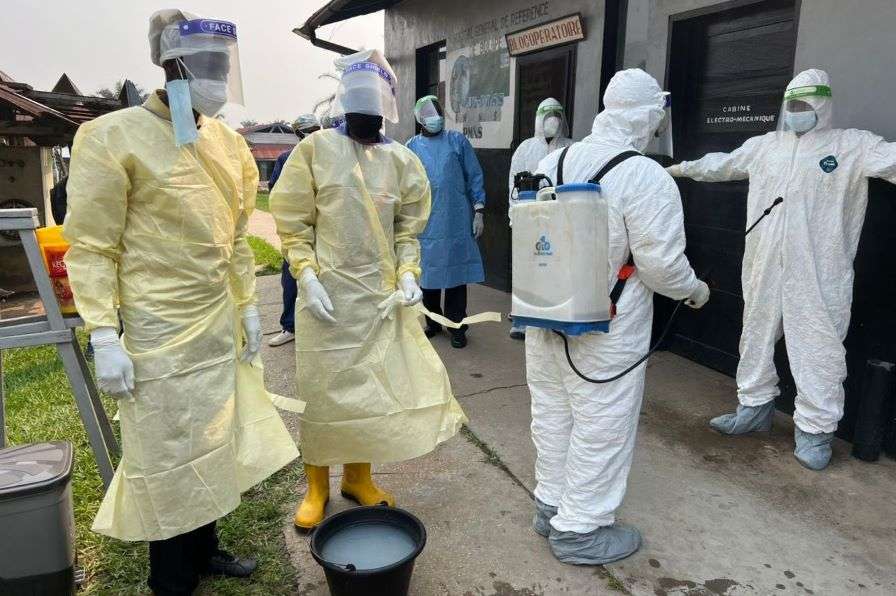
Eastern Congo presents a uniquely hostile environment for disease containment. Years of political instability and militia violence have gutted medical infrastructure. This ongoing crisis leaves the region’s youngest citizens severely exposed.More than half of children under five in Ituri province suffer from chronic malnutrition. One in five has never received basic childhood immunisations. Their immune systems are entirely unprepared for a severe hemorrhagic fever.
Dr Douglas Noble, UNICEF’s global lead for public health emergencies, highlighted this fragility. He noted that the capacity of these communities to absorb additional stressors has reached a breaking point. Historical data indicates that children face the highest fatality rates during such epidemics.
UNICEF recently dispatched eight transport flights carrying 100 tonnes of emergency medical supplies. They have also deployed 1,600 community health workers to establish front-line defences. Despite these efforts, the lack of an approved vaccine for the Bundibugyo strain limits medical interventions.
Regional Implications of the DRC Ebola Outbreak
The crisis carries significant weight for the broader continent. The intense movement of people across the DRC’s eastern borders poses a continuous regional threat. Neighbouring states must activate their surveillance networks to prevent cross-border spillage that could disrupt regional health security and economic stability.
The Africa Centres for Disease Control and Prevention continues to push for stronger local testing capacity across member states. The situation in Beni, where a single laboratory processed 500 tests in one day, proves the value of decentralised diagnostics. This rapid local testing serves as a vital blueprint for other African governments facing similar disease threats.
Health teams are currently tracing just over 70 percent of known contacts. This figure marks an improvement but falls short of the threshold required to halt transmission. Reliable community engagement remains the primary tool to bridge this gap.
Authorities must secure sustained humanitarian access to isolated zones. The coming weeks will determine whether local testing and contact tracing can outpace the virus. Failure to contain the spread will force an unprecedented medical response on the continent, demanding a unified effort from across Afrikeye‘s core coverage regions.