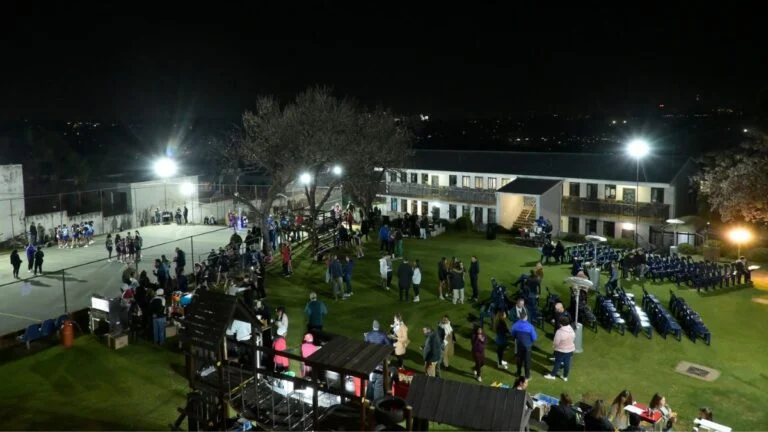


The landscape of private education in Gauteng has shifted significantly following the news that king david victory park closed its gates for the final time. Despite the institution delivering some of the most impressive academic results in South Africa, the campus has officially ceased operations. This development has sent ripples through the local community, as families and educators navigate the aftermath of losing a landmark school that served the region for over six decades.
The decision marks a pivotal moment in the Africa News Update 2026 cycle, highlighting the economic and demographic pressures currently facing high-end independent schools. While the school’s performance remained elite until its final day, systemic challenges within the broader education network necessitated a difficult consolidation.
A Legacy of Academic Excellence Amidst Closure
It is rare for a school to shut down while at the peak of its academic powers. When king david victory park closed, it did so with a remarkable track record of 3.44 distinctions per matric candidate. The Class of 2025 achieved a 100% university entrance pass rate, with nearly half of the students securing an “A” average.
According to national rankings for co-educational private schools, the campus placed sixth in the country. This high level of achievement reflects the “teaching excellence” that General Director Rabbi Ricky Seeff previously emphasized as a core pillar of the King David brand. However, high marks alone were not enough to save the campus from a shifting business environment in the private sector.
Why King David Victory Park Closed: The Core Factors
The primary driver behind the shutdown was a steady decline in student enrollment. For a school to provide world-class facilities, diverse subject choices, and a robust sports program, it requires a specific “critical mass” of learners. As numbers dwindled in various grades, maintaining the expected standard became financially and operationally unsustainable.
Several factors contributed to this shift:
- Demographic Migration: The Jewish population in Johannesburg has progressively moved toward the north-eastern suburbs, including Sandton and Glenhazel.
- Pipeline Weakness: With families moving away, the enrollment pipeline for the Victory Park area thinned, while sister campuses in Linksfield and Sandton grew stronger.
- Strategic Consolidation: The South African Board of Jewish Education opted for a “ONE King David” strategy, reducing the network from five campuses down to four to ensure long-term resilience.
Navigating the Transition in 2026
Now that king david victory park closed, the focus has turned to student and staff integration. Reports indicate that approximately 90% of learners stayed within the network, with many following their peers to the Linksfield campus. The transition was managed through extensive health and wellness support, including counseling services for students dealing with the emotional weight of leaving their “school home.”

For the faculty, the transition was equally significant. Around 85% of the staff were retained and offered positions across the remaining schools in the network. This move was intended to preserve the institutional knowledge and culture that defined the Victory Park experience for sixty years.
Preservation of Heritage and Property Status
Even though king david victory park closed, leadership is determined to keep its history alive. Decades of trophies, archives, and cultural artifacts are being cataloged for display at other campuses. As for the physical property, it remains unsold as of early 2026, though interest from various buyers has been noted. The future of the local synagogue, which shared the grounds, remains tied to the eventual sale of the land.
The Broader Impact on South African Private Education
The reality of the king david victory park closed campus serves as a case study for the Africa News Update 2026 regarding the sustainability of private institutions. Economic strain on households and shifting urban populations are forcing even the most prestigious schools to reassess their travel and operational costs.
Parents looking for placements in 2026 and 2027 are now facing fewer options in the Emmarentia and Greenside areas. This has sparked a wider debate about the resilience of the private schooling ecosystem and how schools must adapt to remain viable in an AI driven and rapidly changing global economy.
Looking Toward the Future
The closure of such a storied institution is undoubtedly a loss for the local community, yet the Board of Jewish Education maintains that the consolidation was necessary for the survival of the entire system. By focusing resources on fewer, more populated campuses, they aim to provide a more stable and technologically advanced tech environment for future generations.
While the physical doors of the king david victory park closed school are locked, its final matriculants have proven that the spirit of the school remained unbroken until the very end. The resilience shown by these students serves as a benchmark for the entire sports and academic community in South Africa.
Strategic Repurposing: The Future of Educational Sites
As of early 2026, the property formerly occupied by King David Victory Park remains a subject of high interest among developers. The closure has occurred during a “balanced recovery” for the South African property market. With the prime lending rate stabilizing at 10.25%, the best buying conditions since 2020 have emerged, making large-scale acquisitions more viable for business entities and investment trusts.
Industry experts suggest that school properties are prime candidates for mixed-use redevelopment. In similar Johannesburg nodes, older institutional stock is being converted into secure residential estates or high-density student accommodation to meet the growing demand in the tech and education hubs nearby.

Key Real Estate Trends for 2026:
- Asset Repurposing: Developers are increasingly looking to convert former retail and office sites into “alternative assets” such as boutique hotels or healthcare clinics.
- Green Infrastructure: Newer developments in the Victory Park area are prioritizing health and sustainability, with solar readiness and water management systems becoming standard expectations for buyers.
- Sectional Title Dominance: There is a 78% retention rate for tenants in well-run sectional schemes, making the division of large campuses into smaller, secure clusters a lucrative strategy.
Market Sentiment in Victory Park
Victory Park remains a “leafy,” high-demand suburb. Recent listings in the area show that family homes and clusters are fetching between R2.4 million and R3.5 million, reflecting the suburb’s enduring appeal despite the school’s exit.
The Africa News Update 2026 indicates that while the commercial office sector in Johannesburg faces pressure, “A-grade” decentralized spaces—like those that could be developed on the former school grounds—continue to see interest from professional services.
Impact on Local Investment
For investors, the fact that king david victory park closed represents an “unlocking” of prime land in a land-locked northern suburb. With sports facilities already on-site, there is potential for the property to be transformed into a private sports academy or a high-end retirement village, catering to the aging demographic in neighboring Linden and Greenside.
The South African Board of Jewish Education (SABJE) has signaled it is in no rush to sell, ensuring that any future travel or development plans for the site align with the community’s long-term interests.