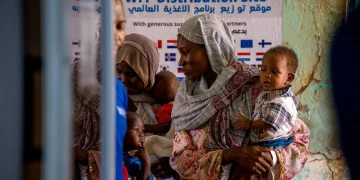





For 1,000 days, the silence has been as deafening as the shelling. As of January 2026, Sudan has surpassed a grim milestone: over 33 months of a brutal, fratricidal war that has transformed Africa’s former breadbasket into the site of the world’s largest hunger and displacement crisis.
But the most terrifying date on the calendar isn’t in the past—it’s just weeks away. The World Food Programme (WFP) has issued a final, desperate warning: by the end of March 2026, food stocks in Sudan will be completely depleted. Without an immediate infusion of $700 million, the lifeline for millions of African brothers and sisters will simply cease to exist.
This is not a “humanitarian situation” to be observed from afar. This is an African emergency that threatens the stability of our entire continent of Sudan famine 2026.
The Current Reality: Famine is No Longer a Prediction—It is Here
In early 2024, experts warned of “potential” famine. By late 2025, those warnings became a devastating reality. Today, in 2026, famine (IPC Phase 5) is no longer a risk; it is a lived experience for hundreds of thousands of families trapped behind front lines.
Confirmed Famine Zones and High-Risk Areas
Al Fasher and Zamzam Camp (North Darfur): The situation in Zamzam, home to over 500,000 displaced people, has officially passed the famine threshold. Families are surviving on boiled leaves and animal fodder.
Kadugli and Dilling (South Kordofan): After being under siege for over a year, these towns are witnessing starvation deaths daily. A single UN convoy reached Kadugli in late 2025, but it was a drop of water in a desert of need Sudan famine 2026.
The “Greater Darfur” Region: 20 additional locations across Darfur and Kordofan are on the verge of tipping into Phase 5 status.
The Staggering Numbers of 2026
21.2 Million People: Nearly half of Sudan’s population is facing acute hunger.
12 Million Displaced: Sudan is now the global epicenter of displacement. More people have been uprooted here than in Ukraine or Gaza.
3.7 Million Vulnerable: This includes children under five and pregnant or breastfeeding mothers who are severely malnourished and at immediate risk of death.
Why the WFP is Running on Empty: The $700 Million Gap
The World Food Programme has been the only thing standing between millions of Sudanese and certain death. Since the conflict re-ignited in April 2023, the agency has reached 10 million people with food and cash assistance. But the math of survival is no longer adding up.
The Funding Crisis Explained
The March 2026 Deadline: WFP leadership has confirmed that current food stocks will run out by the end of March.
The Shortfall: To keep operations running through June 2026, the agency requires an immediate $700 million for Sudan famine 2026.
Ration Cuts: Because of the funding gap, WFP has already been forced to reduce food rations to the “absolute minimum for survival.” This means even those who receive aid are only getting a fraction of the calories needed to maintain health.
Global Fatigue: As other global conflicts dominate the headlines, Sudan’s funding has collapsed by nearly 50%, leaving the WFP to make impossible choices about who gets to eat and who does not.
A Nation Under Siege: Beyond the Hunger
Hunger does not exist in a vacuum. It is the result of a deliberate “siege warfare” strategy that has dismantled the very foundation of Sudanese society.
The Collapse of the Health System
In conflict-affected areas, the healthcare system has essentially vanished.
70% to 80% of hospitals are non-functional.
Direct Attacks: Over 200 verified attacks on healthcare facilities have occurred since the start of the war.
The Disease Multiplier: Malnourished bodies cannot fight off illness. We are seeing massive outbreaks of Cholera, Malaria, and Dengue Fever in overcrowded displacement camps where water and sanitation services have failed.
The Economic Death Spiral
300% Price Hikes: In many regions, the price of basic staples like sorghum and wheat has increased by 300-400%.
Destruction of Agriculture: Sudan’s “breadbasket” states—Al Jazira and Sennar—have seen their farms turned into battlefields.
Market Sieges: Armed groups frequently block trade routes, ensuring that even if a family has money, there is no food to buy.
“One thousand days of conflict is one thousand days too many. Every single day that fighting continues, families are falling deeper into hunger and communities are pushed further to the brink.” — Ross Smith, WFP Director of Emergency Preparedness and Response (January 2026)
An African Crisis Requiring African Solutions
For too long, the narrative of Sudan has been framed as a “Middle Eastern” power struggle or a “Global North” charity case. But the fallout is distinctly African.
The Regional Domino Effect
Sudan’s neighbors are being pulled into the abyss.
Chad: Hosting over a million refugees while facing its own internal food insecurity.
South Sudan: A country already on the edge is now seeing hundreds of thousands of returnees and refugees flee back into its territory, where food aid is also being cut.
Ethiopia & Egypt: Strained by the influx of millions seeking safety, creating potential for regional instability.
The Role of the African Union (AU)
As Africans, we must demand more from our continental leadership. We cannot wait for Western powers to prioritize a conflict they have largely ignored.
Diplomatic Pressure: The AU must move beyond statements of “concern” and implement high-level, sustained mediation that targets the regional backers of both warring parties.
Humanitarian Corridors: We need an African-led initiative to guarantee safe passage for food convoys. Using the “silencing the guns” framework, the AU must prioritize Sudan as its number one security threat in 2026.
What Can We Do? A Call to Action for the Continent
It is easy to feel powerless when faced with a crisis of this scale, but the next 60 days are critical. If we do not act before the March deadline, the “famine” will become a “mass starvation event” the likes of which we haven’t seen in decades.
- Amplify the Message (#KeepEyesOnSudan)
The world is looking away because they think we don’t care. Use your platform to share the stories of Sudanese families.
Follow and share updates from the WFP Sudan and Doctors Without Borders (MSF).
Tag your local representatives and the African Union (@_AfricanUnion) to keep Sudan on the agenda.
- Support Community Kitchens (Takaaya)
When international aid fails, the Sudanese people help each other.
Takaaya are volunteer-run community kitchens providing the only meal of the day for thousands.
Many of these are shutting down due to lack of funds. Direct support to local Sudanese NGOs and “Emergency Response Rooms” (ERRs) can provide immediate relief where large agencies cannot reach.
- Direct Donations to the WFP
The WFP has the logistics and the teams on the ground; they only lack the fuel—funding.
[Link to WFP Sudan Emergency Fund]
Even small contributions from across the continent show a unified African front against starvation.
Conclusion: The Clock is Ticking for Sudan
We are currently in a race against time. The end of March 2026 isn’t just a logistical deadline for the World Food Programme; it is a life-or-death sentence for 21 million people.
If we allow the WFP resources to dry up, we are not just failing Sudan; we are failing the idea of a united, prosperous Africa. We are allowing a man-made disaster to erase a generation of our brothers and sisters.
Sudan was once a land of incredible promise, culture, and agricultural wealth. It can be that again, but only if we ensure its people survive this winter. The guns must fall silent, the corridors must open, and the world—especially Africa—must provide the resources to keep the kitchens running.
The world may have looked away, but as neighbors, as brothers, and as Africans, we cannot.
Sudan emergency page here
High-resolution photos available here
Distributed by African Media Agency (AMA) on behalf of Word Food Program