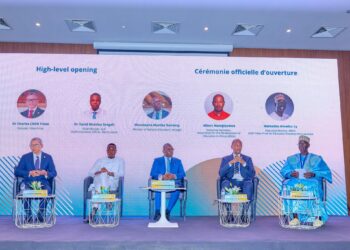





In a powerful display of continental unity, Democratic Republic of the Congo (DRC) President Félix Antoine Tshisekedi recently hosted South African President Cyril Ramaphosa in Kinshasa to strategize on accelerating the Ebola response in the DRC. The high-level summit, convened at the Institut National de Recherche Biomédicale, brought together top officials from the Africa Centres for Disease Control and Prevention (Africa CDC), the World Health Organization (WHO), the World Bank, and the European Union.
This critical meeting underscored the urgency of containing the deadly Bundibugyo virus outbreak, which is currently threatening not just the DRC, but neighboring nations as well. “The Government is closely monitoring the situation on a daily basis and is taking the necessary measures to protect our population,” stated President Tshisekedi, whose remarks were echoed across international relief portals. He further highlighted the severe challenges posed by regional insecurity, noting that armed conflict significantly weakens epidemiological surveillance and the rapid deployment of public health actors.
Financing and Coordinating the Ebola Response in the DRC
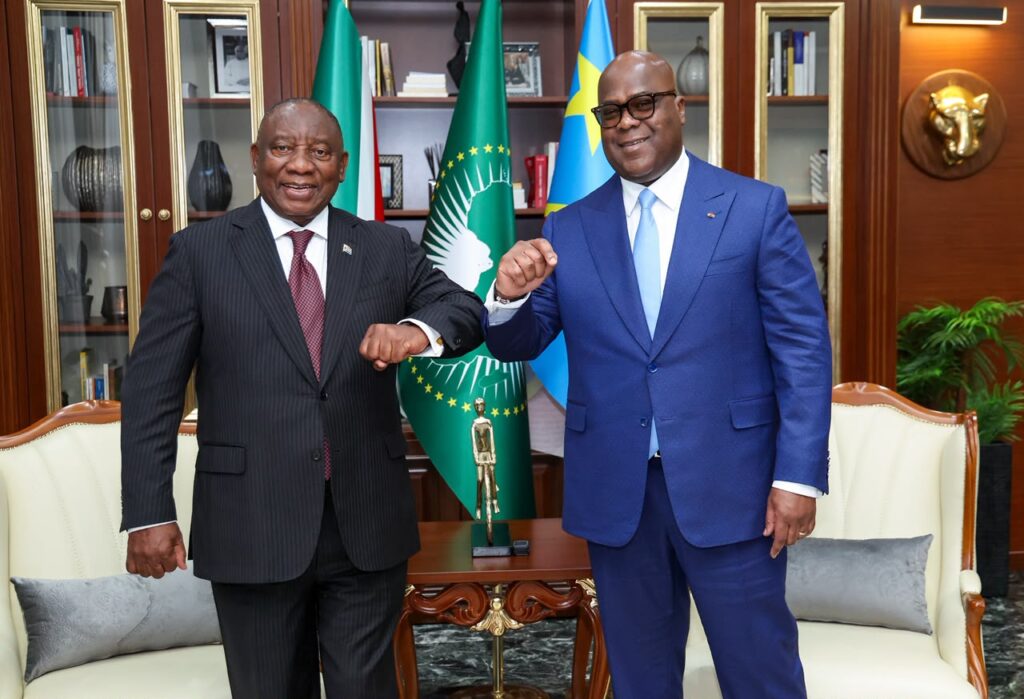
As the African Union Champion for Pandemic Prevention, Preparedness, and Response, President Ramaphosa delivered a firm message of solidarity. Emphasizing that public health security transcends borders, he pointed to the rapid mobilization of continental resources. A recent virtual summit convened by Burundi’s President Ndayishimiye has already rallied approximately US$1.5 billion in financing and medical countermeasures, with over US$100 million pledged directly by African nations.
“The continental response to this Ebola outbreak has been swift,” Ramaphosa affirmed in a national address. “When there is tragedy in one part of our beloved continent, we all share in the sorrow. When a sister country needs assistance, we answer that call.”
Despite these substantial financial pledges—including US$50 million from the DRC government, US$13.5 million from South Africa, and a newly announced US$10 million from the World Bank—the operational reality on the ground remains highly challenging. According to Dr. Jean Kaseya, Director General of Africa CDC, while the joint preparedness and response plan requires US$518 million, only 21% of the committed funds have actually been disbursed to frontline teams. For those coordinating regional travel arrangements or deploying medical personnel, the lack of fluid capital remains a significant hurdle.
“Ebola moves fast. Africa must move faster,” Dr. Kaseya warned. “The financing exists. The commitments exist. They must now reach the places where they save lives.”
As consistently reported on the main African news portal, the Kinshasa meeting concluded with a unified call for international partners to quickly align their support with the DRC’s national priorities. By avoiding blanket travel restrictions and focusing on targeted, responsible public health interventions, African leaders are proving that the continent is fully capable of managing complex health emergencies through coordinated, sovereign action.