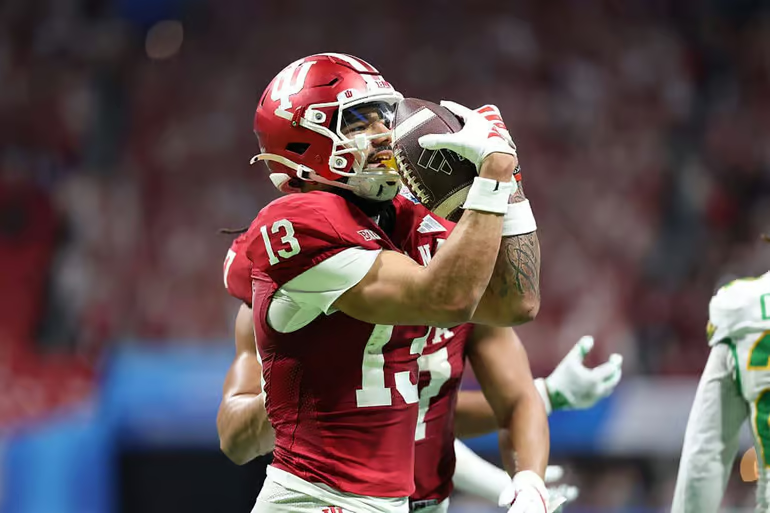





In a result that has redefined the modern era of college football, the Indiana Hoosiers completed an unprecedented 16-0 season by defeating the Miami Hurricanes 27-21 on Monday night. Held at Hard Rock Stadium, the victory marks the first national championship in the history of a program once known primarily for its struggles on the gridiron. Led by Heisman Trophy winner Fernando Mendoza, Indiana overcame a hostile “home” environment for Miami to cement one of the most remarkable turnarounds in sporting history.
A Historic Turnaround Under Curt Cignetti
Just two years ago, Indiana was statistically among the least successful programs in the FBS. However, the arrival of head coach Curt Cignetti sparked a total cultural overhaul. Cignetti, a coach who famously told fans to “Google him” because he simply wins, transformed a team with 715 historical losses into an undefeated powerhouse.
This meteoric rise has caught the attention of global observers, drawing parallels to the unpredictable nature of international tournaments often highlighted in our Africa news updates 2026. Much like the underdog stories seen at the Senegal vs Morocco AFCON 2025 final, Indiana proved that entrenched hierarchies in college football can be dismantled with the right leadership and discipline.
Fernando Mendoza: From Miami Native to Heisman Hero
The heartbeat of this championship run was undoubtedly Fernando Mendoza. The junior quarterback, who grew up just miles from Miami’s campus, delivered the defining play of the game in the fourth quarter. On a critical fourth-and-4, Mendoza scrambled 12 yards, breaking multiple tackles and launching himself into the end zone to give Indiana a 24-14 lead.
Mendoza’s performance was not just about statistics, though his season-long accuracy was elite. It was about his willingness to sacrifice his body for the program. “I would die for my team,” Mendoza told reporters post-game, a quote that has since gone viral across social media. His heritage—rooted in the sacrifices of his Cuban grandparents—has made him a symbol of perseverance for Hispanic athletes across the United States.
Defensive Resilience and Key Moments
While Mendoza provided the offensive spark, the Indiana defense held firm against a physically imposing Miami line. Mikail Kamara’s blocked punt in the third quarter, recovered by Isaiah Jones for a touchdown, provided the momentum shift Indiana desperately needed.
Later, with only 44 seconds remaining, Jamari Sharpe intercepted Miami’s Carson Beck to officially end the Hurricanes’ comeback hopes. This defensive masterclass ensured that college football would crown a first-time champion for the first time since 1996.
The Impact on the Indiana Community
The victory has sparked massive celebrations in Bloomington, where fans braved sub-zero temperatures to watch their team make history. For many, this win feels like a “refund” for decades of loyalty to a losing program. The surge in interest has also boosted local sports tourism, with many looking to travel to upcoming games and explore the Midwest’s revitalized sports scene.
As college football enters a new era of 12-team playoffs and NIL-driven parity, Indiana’s blueprint—prioritizing character and production over high-school star ratings—will likely be studied by programs nationwide. For more deep dives into global sporting achievements and regional developments, visit Afrikeye.com.
Looking Ahead to the NFL Draft
With the season concluded, the focus now shifts to the professional future of Indiana’s stars. Mendoza is widely projected to be a top pick in the upcoming NFL Draft, potentially following in the footsteps of legends like John Elway. His ability to remain calm under pressure and his Heisman-winning leadership have scouts calling him the most “NFL-ready” prospect in years.
Meanwhile, coach Cignetti has secured his legacy. Having recently signed an eight-year contract worth $11.6 million annually, he has ensured that Indiana will remain a contender in the Big Ten for the foreseeable future. This dominance marks a permanent shift in the landscape of college football, proving that no program is truly “dead” if the right culture is established.