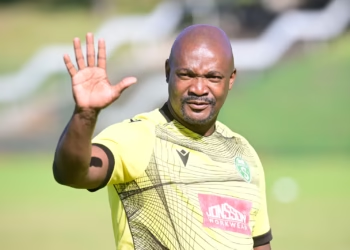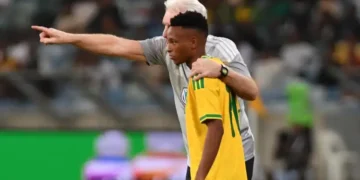





Bafana Bafana head coach Hugo Broos has unveiled his preliminary squad for the upcoming 2026 FIFA World Cup qualifiers, instantly triggering intense national debate over player form, club biases, and tactical consistency. For an African continent where qualification for the global showpiece guarantees substantial financial windfalls and massive geopolitical prestige, national team selections are heavily scrutinized. Navigating public expectation while building a durable squad remains the most high-stakes challenge within the modern African sports ecosystem.
The veteran Belgian tactician has named an expansive group of players to begin intensive preparations for the crucial qualification fixtures. As confirmed by the South African Football Association, the squad will be trimmed down to a final selection ahead of the official matchdays. Broos has largely retained the core group of players that secured third place at the recent Africa Cup of Nations, favoring tactical continuity over radical squad overhauls.
The Selection Dilemma: Why Hugo Broos Faces Growing Public Backlash
The squad announcement has not escaped severe criticism from former professionals and domestic soccer analysts. A former Orlando Pirates star has publicly questioned Hugo Broos’ selection criteria for the 2026 FIFA World Cup, suggesting that the head coach has an underlying problem with how he evaluates top-tier talent. Critics argue that certain out-of-form players continue to receive call-ups based solely on reputation, while several highly consistent domestic performers are being systematically ignored.
Despite the vocal pushback from rival fan bases, the inclusion of a strong contingent from the country’s most supported teams remains a massive talking point. eNCA highlighted that four Kaizer Chiefs players headline the preliminary squad, signaling a notable return to prominence for Amakhosi stars on the international stage. Balancing the immense political and social influence of South Africa’s “Big Three” clubs while remaining entirely objective is a constant hurdle in domestic football politics.
Managing the commercial and sporting success of the national team directly impacts the economic health of local athletic institutions. When Bafana Bafana performs well on the international stage, it instantly drives up the transfer valuation of local players and creates highly lucrative domestic coaching and administrative jobs. A successful World Cup qualification campaign acts as a powerful catalyst for corporate investment, transforming football from a simple pastime into a highly profitable national business.
Furthermore, international matchdays generate massive secondary revenue for the regional hospitality, aviation, and travel sectors as thousands of fans move across provinces to fill stadiums. Modern sports associations are also deploying advanced digital tracking tech and biometric analytics to precisely monitor player fatigue during these grueling international windows. Technical directors are even utilizing AI performance data to scout opposition tactics, proving that modern football is now won as much in data labs as on the training pitch.
Ultimately, Broos will stand or fall by the final results of the qualification campaign, regardless of public discontent. The veteran coach has consistently shown that he is entirely unfazed by media pressure or external opinions. The coming weeks will reveal whether his unwavering faith in his tactical system will successfully guide South Africa back to the absolute pinnacle of global football.
For continuous, expert analysis of Bafana Bafana’s path to the global showpiece, visit the Afrikeye homepage directly. You can also join our interactive AMA sessions to share your personal opinion on the final squad selections with football fans from across the continent.