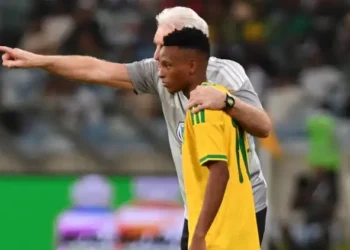


Orlando Pirates forward Mohau Nkota has broken his silence following his high-profile omission from the Bafana Bafana squad for the upcoming 2026 FIFA World Cup qualifiers. For a continent where footballing success dictates massive financial investment and cultural pride, the exclusion of one of South Africa’s brightest young talents highlights the unforgiving nature of elite athletic development. Navigating public scrutiny and squad selection remains a major hurdle for young athletes trying to establish long-term careers in the highly competitive African sports industry.
The technical team of the South African national team opted for experienced continental veterans over the young winger, citing a recent decline in his domestic performance metrics. As KickOff reported, Nkota expressed deep disappointment regarding the selection decision but vowed to channel his frustration into reclaiming his peak form for his club. The player emphasized that representing his country at the global showpiece remains his ultimate career objective, and he respects the structural hierarchy governing national team selections.
Managing the Psychological Pressures: What Happened to Mohau Nkota?
The public debate surrounding his omission has exposed deeper structural issues concerning the mental health and institutional support systems available to rising African sports stars. Former Orlando Pirates technical staff recently shed light on the intense personal and professional pressures that precipitated the young player’s sudden drop in on-pitch output. According to Soccer Laduma, undisclosed personal struggles and the psychological weight of overnight stardom heavily contributed to his temporary performance dip, illustrating the precarious nature of teenage sports stardom.
Managing the psychological well-being of young athletes is a critical challenge that directly impacts domestic retention rates and the overall valuation of local jobs in football. When premium talent experiences unaddressed personal crises, local clubs lose significant competitive advantages and risk depreciating their primary financial assets. Sports clubs across the continent are beginning to recognize that holistic player care, combining physical conditioning with psychological support, is essential to sustaining a lucrative business model.

The intense media spotlight focused on Nkota’s personal life and form reflects a broader, problematic trend in modern football journalism, where young prospects are building or breaking under extreme scrutiny. This volatile atmosphere has prompted widespread debate within domestic politics regarding the responsibility of sporting federations to shield young citizens from destructive online abuse. Analysts argue that without robust institutional guardrails, the relentless pressure from social media platforms will continue to prematurely hollow out promising sporting careers.
Fierce competition across African leagues means that national selectors cannot afford to carry out-of-form players, regardless of their raw potential or past contributions. Bafana Bafana head coach Hugo Broos has consistently favored strict tactical discipline and match fitness over reputation, a selection policy that has drawn mixed reactions from the public. As Koora Break highlighted, the administrative demands of a grueling qualification campaign require players who are both mentally resilient and physically peak-conditioned to withstand elite continental opposition.
The strategic dilemma facing South African football mirrors development challenges in other major continental powerhouses like Nigeria, Ghana, and Senegal, where highly gifted youngsters frequently struggle with the transition to senior international football. Elite youth academies across West and North Africa produce technically exceptional players, but many struggle to adapt to the rigorous tactical demands of senior tournaments. Balancing immediate qualification goals with long-term youth integration remains a critical policy debate inside the corridors of the African Union’s sports development organs.
Furthermore, national team success acts as a vital economic catalyst for local industries, boosting domestic tourism, hospitality, and regional travel networks during major qualification matchdays. A thriving national team attracts massive corporate sponsorships and international broadcasting capital, which can be reinvested into upgrading aging grassroots infrastructure. When high-profile selection disputes dominate public discourse, it can distract from these essential commercial objectives and weaken institutional investor confidence.

To mitigate these recurring talent development bottlenecks, modern African academies are starting to integrate advanced performance data tracking and player health analytics. Monitoring biometric data allows sport scientists to identify signs of physical fatigue and underlying stress before they manifest as severe dips in matchday output. Adopting these global best practices ensures that clubs can proactively intervene and support their athletes through difficult personal transitions.
The digital transformation of football management is also redefining the role of scouting, with global clubs using advanced data platforms to track player consistency across multiple seasons. Young African athletes must realize that their performance is constantly quantified by automated tech systems used by international scouts looking for durable talent. This shift means that technical precision and mental consistency are now valued just as highly as natural athletic flair.
As machine learning tools become more prevalent, club executives are utilizing AI performance modeling to project development curves and calculate transfer market values. This level of sophisticated data analysis helps clubs determine whether a player’s current form is a temporary statistical anomaly or a deeper structural regression. Embracing these analytical tools allows sports administrators to make highly objective decisions regarding player contracts and squad development.
Ultimately, the responsibility for navigating these complex career hurdles rests on the shoulders of the players and their immediate support structures. Nkota’s determination to overcome his recent setback and earn his place back in the national setup shows a mature perspective on professional development. The coming months will test his resilience as he looks to quieten critics and prove his technical worth on the domestic stage.
Football fans across the region will be watching closely to see if the young forward can successfully translate his undeniable talent back into consistent match-winning performances. The ability of South African football to protect and nurture assets like Nkota will heavily define its competitive standing in future continental championships. For a comprehensive look at how talent management is evolving across the continent, visit the Afrikeye homepage or participate in our interactive AMA sessions to share your personal opinion.