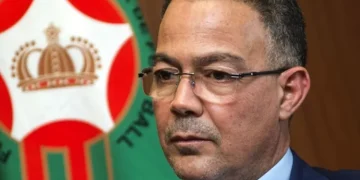





Rabat — Morocco is positioning football as a key driver of economic and social development across Africa. The president of the Royal Moroccan Football Federation (FRMF), Fouzi Lekjaa, said Monday in Rabat that Morocco’s football experience serves as a model for leveraging sports, particularly football, in strategic development initiatives (Morocco football development).
Football Reform and Strategic Vision
During the opening of the fourth African Days of Investment and Employment, Lekjaa highlighted that the real launch of Morocco’s national football reform began with the Royal Message to the 2008 Skhirat Conference, outlining a detailed roadmap for restructuring Moroccan sports (Skhirat Conference roadmap).
The event, organized by the Souissi Faculty of Legal, Economic and Social Sciences in Rabat in partnership with the FRMF, showcased Morocco’s focus on long-term planning and investment in talent development.
Investment in Football Training Facilities
Lekjaa emphasized that the creation of the Mohammed VI Football Academy demonstrates Morocco’s commitment to nurturing talent. The academy has become a hub for Moroccan football training, producing players who compete in top international competitions, reflecting a clear medium and long-term vision.
He noted that investing in training across all age groups, supported by qualified personnel, is essential for developing football as a strategic economic sector.
Governance Measures and Sports Governance
Lekjaa stressed that effective modern governance measures are crucial for the success of Moroccan football (stadium upgrade governance). Modern governance ensures that football’s legal and management frameworks keep pace with ongoing transformations. “Football is no longer a limited-resource activity but an economic system requiring modernized management mechanisms,” he said.
Minister of Higher Education, Scientific Research, and Innovation, Azzedine El Midaoui, added that Morocco’s football achievements are the result of a strategic process based on comprehensive analysis. Investment has targeted infrastructure, technology, performance analysis, governance, and socio-economic integration, showing the importance of sports governance (sports governance study) in driving sustainable development.
Football as a Tool for Economic and Social Integration
Mohammed V University President Mohamed Rhachi highlighted that football economics presents opportunities to attract investment, create jobs, and enhance social and economic indicators. Football is now an economic industry, a symbol of Moroccan soft power, and a tool for continental integration (Morocco leading in African football).
The fourth African Days of Investment and Employment also emphasizes Africa’s untapped potential — young human capital, natural resources, and innovation capacities. The conference encourages universities to act strategically in shaping public policies and building future development visions.
Faculty Dean Omar Hanich stated that Moroccan universities contribute knowledge, guide vision, and influence public policy, supporting national and continental development. The conference facilitates scientific discussions on African sports realities and actionable policy proposals.
Advancing Africa’s Sports Sector
The two-day conference, themed “Sports and Development in Africa: Football as a Tool for Social and Economic Integration,” highlights Morocco’s historic achievements, including the Atlas Lions’ 2022 Qatar World Cup performance and the U20 national team’s world title.
The event aims to mobilize African sports systems, strengthen value chains and sports economics, enhance human capital and training in sports governance, support innovation and digitization, and foster socio-economic inclusion through football.
Readers interested in exploring African destinations during sports events can check travel opportunities here.
This story was first reported by Morocco World News. Read the full article here.