




A long-term insect eradication campaign in Senegal’s Niayes region has successfully suppressed pest populations, driving a substantial increase in regional meat and dairy production. Organized by the Government of Senegal with technical support from the Food and Agriculture Organization and the International Atomic Energy Agency, the initiative integrated conventional pest traps with the sterile insect technique to disrupt the reproductive cycles of local disease vectors. The multi-year program has effectively eliminated trypanosomosis, a debilitating livestock disease that previously limited agricultural yields across the province.
Before the coordinated intervention began, tsetse fly infestations functioned as a major barrier for rural livestock managers, with infection rates reaching up to 28 percent in some cattle herds. This severe biological pressure forced local communities to rely exclusively on low-yield, disease-tolerant indigenous breeds. By deploying the nuclear-derived sterile insect technique alongside traditional insecticide-treated targets, field teams achieved a reduction of over 99 percent in the local insect population, breaking the cycle of herd reinfestation.
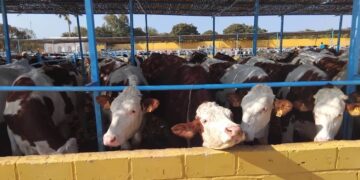
This newfound biological safety is actively modifying the agricultural business landscape across Western Africa as farming groups rapidly update their operational setups. In the past, high veterinary costs and frequent cattle mortality discouraged long-term capital investments in high-yield dairy lines. With the vector successfully removed from the ecosystem, commercial livestock operations can safely import highly productive exotic breeds without risking catastrophic herd losses from unexpected disease outbreaks.
| Metric Explored | Pre-Intervention Baseline | Post-Intervention Outcomes (2024–2026) |
|---|---|---|
| Tsetse Fly Population | High Infestation Level | Reduced by more than 99% |
| Exotic Cattle Proportions | 1.5% of regional herds | Greater than 27% in targeted systems |
| Annual Milk Yield per Cow | 157 liters | Over 2,100 liters in modern setups |
| National Dairy Output | 4.3 million liters (2018) | 62.5 million liters achieved |
The sudden expansion of productive dairy networks is altering local politics and regional development priorities, forcing state departments to allocate infrastructure budgets toward centralized refrigeration hubs and rural transport corridors. Since 2017, communities have established 904 modern dairy farms in the Niayes region, representing nearly three-quarters of all intensive dairy operations across the entire country. This rapid formalization has stimulated processing and distribution setups, creating sustainable jobs for young people and women both in rural villages and the capital city of Dakar.
Socioeconomic Gains From the Sterile Insect Technique Program
Rigorous impact assessments conducted by economists at the Institut Sénégalais de Recherches Agricoles and the French research body CIRAD demonstrate clear financial gains across the rural economy. Average household income from livestock production has risen by 45 percent, while direct revenues from milk sales show a 61 percent increase. Concurrently, the sharp decline in cattle sickness has resulted in a 63 percent reduction in the cost of veterinary treatments, allowing families to redirect scarce household capital toward educational needs and farm infrastructure.
To preserve these agricultural achievements, veterinary services are introducing advanced data logging platforms within the national tech sector to monitor herd safety continuously. Technicians are using decentralized software to log entomological catches and track random parasitological screenings across vulnerable border zones. This digital expansion helps field teams maintain high vigilance against external reinfestation vectors, mirroring the strict electronic monitoring systems used by the Africa CDC emergency network to handle cross-border biological risks.
Furthermore, the data analysis of regional ecosystem shifts and the predictive modeling of potential insect migrations are being enhanced through automated computing systems. Local laboratories are exploring how specialized ai data models can help identify micro-habitats, such as dense forested pockets or wetlands, where small pest groups might still survive. Incorporating this automated intelligence ensures that monitoring teams can deploy targeted counter-measures quickly without experiencing administrative delays.
Independent epidemiologists sharing their professional opinion columns emphasize that complete eradication is the only way to safeguard large-scale public investments in foreign dairy cattle. They warn that while exotic livestock produce exceptional milk volumes, they remain highly vulnerable to native parasites and changing climate trends. Interested stakeholders can review the complete technical frameworks and read official institutional announcements by visiting the official FAO regional portal online to study area-wide integrated pest management models.