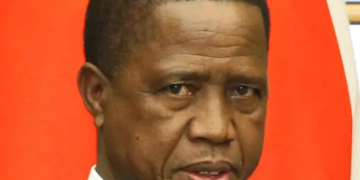





The Edgar Lungu burial ruling delivered by South Africa’s Supreme Court of Appeal on Tuesday closes over a year of legal wrangling that kept a former head of state’s body in a Johannesburg mortuary while two governments and one grieving family fought over his final resting place. The court ruled firmly in favour of the Lungu family, stripping the Zambian government of any legal claim to determine where or how the former president is buried. The decision ends one chapter of a political rivalry that outlasted Edgar Lungu himself.
In a majority ruling, the Supreme Court of Appeal stated that “the common law and constitutional rights of family prevail” over the Zambian government’s claim to Lungu’s remains. The court set aside the lower court ruling that had halted a private burial at the last minute in June 2025 and had ordered Lungu’s remains repatriated to Zambia. South Africa’s Justice Ministry followed swiftly, stating that “this is now a private matter for the Lungu family to proceed with their desired burial” in South Africa.
Lungu died on June 5, 2025, at the age of 68, from an undisclosed illness while receiving medical treatment in a South African hospital. He had led Zambia from 2015 to 2021, winning two presidential elections against his bitter rival Hakainde Hichilema, who now occupies the office Lungu once held. His body remained in a mortuary throughout the legal proceedings while the two sides fought in court over whether family wishes or state protocol should prevail.
The family’s funeral service in South Africa in June 2025 was abruptly halted when the Zambian government filed an urgent court application, arguing that the country’s customs and protocols required Lungu to be buried at the national cemetery in Lusaka. That move forced members of Lungu’s family to leave a burial service still dressed in funeral attire and attend a courtroom hearing instead. A Pretoria High Court subsequently ruled that Lungu could not be buried until the dispute was resolved, setting the case on the path to Tuesday’s appeal.
Edgar Lungu Burial Ruling Sets a Precedent for Family Rights Across African Political Disputes
The legal battle was inseparable from the political one. During Lungu’s presidency, Hichilema spent four months in jail in 2017 on treason charges related to his convoy failing to yield to the president’s motorcade a move widely condemned internationally, with the charges eventually dropped. Lungu lost the 2021 election to Hichilema by a landslide, and subsequently accused Hichilema’s government of using police to restrict his movements and place him under effective house arrest accusations the government denied. After Lungu’s death, his wife and children were charged with corruption, with loyalists claiming it was a continuation of political persecution.
The Zambian government argued throughout the dispute that national tradition and precedent required Lungu to be buried at Embassy Park in Lusaka the official resting place of former heads of state — with full state and military honours, as had been the case for former presidents Levy Mwanawasa, Frederick Chiluba, Michael Sata, Kenneth Kaunda, and Rupiah Banda. The family’s position was equally firm: Lungu had left explicit instructions that Hichilema should play no role in his funeral and should not be present at his burial.
The court also rejected Zambia’s secondary argument. As Reuters reported, the Supreme Court of Appeal found that the evidence pointed to ongoing negotiations between the family and the government rather than any binding agreement on funeral arrangements dismantling the government’s claim that a deal had already been struck.
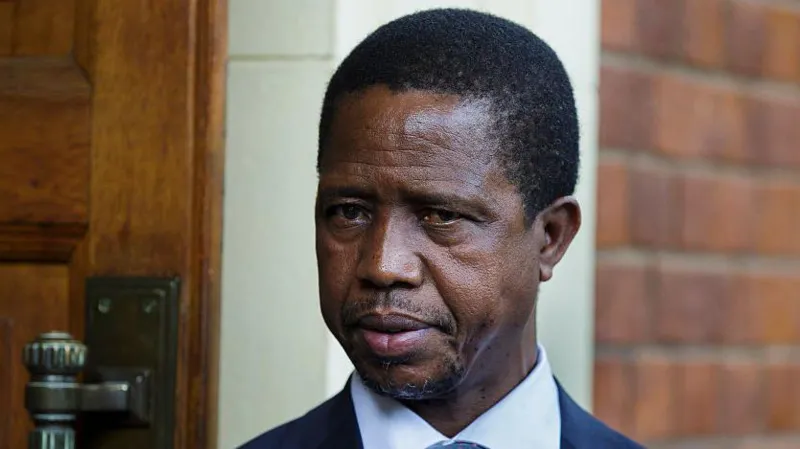
In a significant concession, the Zambian government announced it would not appeal the judgment further. “Although we disagree with today’s judgment, we will not be taking this matter any further,” the Ministry of Justice said in a statement. Zambia’s Attorney-General Mulilo Kabesha did not respond to requests for comment on the ruling.
The case has drawn direct comparisons to the burial dispute surrounding former Zimbabwean President Robert Mugabe, whose family successfully opposed government plans to inter him at the National Heroes Acre and instead buried him at his rural home in Kutama. Both cases raise the same unresolved tension at the heart of African political culture: whether a former leader’s body belongs to the nation that elected him or to the family that raised him. Courts in both South Africa and Zimbabwe have now answered that question the same way, in favour of the family.
For African politics and governance observers, the ruling carries implications well beyond Zambia. It establishes that a foreign government cannot invoke national protocol to override the family rights of a deceased person under South African law. It also exposes how political rivalries in Africa can become so entrenched that they persist through death, litigation, and international jurisdiction. The Southern African Development Community, whose political mandate includes governance and human rights, has remained notably silent throughout a dispute that has embarrassed the region for over a year.
The ruling arrives with Hichilema standing for re-election in August a timing that will not be lost on Zambia’s electorate. Lungu commanded deep loyalty in parts of Zambia, and the spectacle of his government fighting in a foreign court to control a dead rival’s burial has been a source of sustained political damage. Whether Tuesday’s ruling closes the matter entirely depends on what the Lungu family chooses to do next. The Supreme Court of Appeal is South Africa’s second highest court, and a further appeal to the Constitutional Court technically remains open to the Zambian government though Lusaka’s own statement suggests that door is now closed by choice.
Edgar Lungu will be buried where his family decides. That outcome, however obvious it may seem in retrospect, took over a year, two court battles, and a cross-border legal dispute to establish. For the African opinion space, the deeper question the saga leaves behind is what it reveals about how African governments handle the deaths of political opponents and whether the continent has the institutional maturity to separate grief from power.